

The energy industry can seem complicated at times. It’s true whether you’re new to a state with energy choice or if you’ve lived there your whole life. We’ll be the first to admit that some of the terminology is a bit confusing — and we’re industry experts. That’s why we want to help you understand why energy choice — the freedom to choose how you buy electricity and natural gas — is so important to consumers.
Having the power to choose your electricity provider and select an energy plan that suits your lifestyle is pretty awesome — for you and the energy industry as a whole! The competition forces energy companies to focus on low energy prices and high customer service, which ultimately leads to a better customer experience.
Energy deregulation also allows you to purchase renewable power instead of fossil fuels! Under the old model, you had to buy brown power from the utility company, because that’s all that was available. Now, you have the freedom to support renewable power generators — like Chariot! 😉
Yes, the electricity marketplace has lots of rules, regulations and jargon. Terms like “variable rate,” “retail electricity provider” and “public utility commission assessment” can make your eyes glaze over. In fact, we wrote a whole article breaking down how to find an electric plan in Texas that fits your lifestyle.
That said, you don’t need to be an expert to understand energy choice. You really only need to be aware of a few concepts.
The U.S. has around 17 deregulated energy states. Some have either a deregulated electricity market or gas market, while others have both. For those states without energy choice, their electricity rates are set by the public utility commission (a concept we explain below). It’s basically a vertical monopoly, in which one organization owns the entire supply chain from generation to usage.
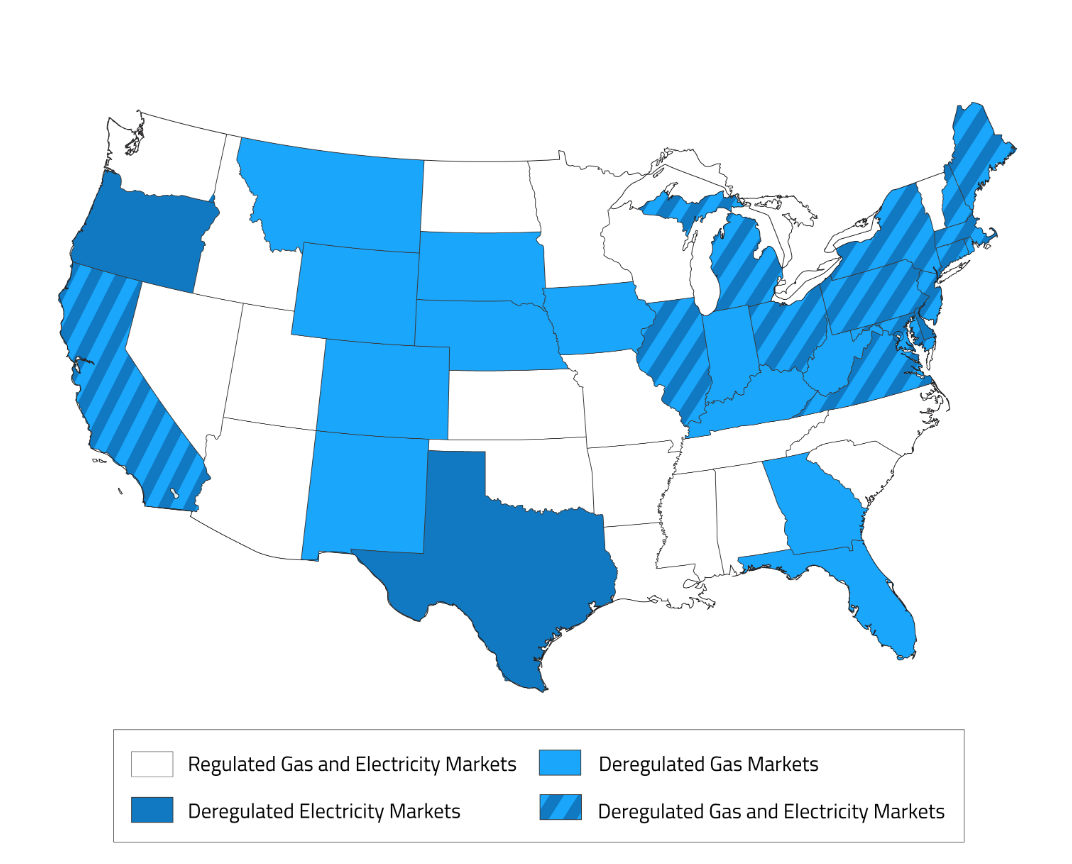
Source: Electric Choice
For our purposes, we’re talking about electricity specifically, but natural gas supply is very much the same.
In a deregulated energy market, three key players drive the activity. All of them are “energy companies,” but each has specific responsibilities:

These companies create electricity. For renewable energy companies like Chariot, they are responsible for taking potential energy found in wind, solar, natural gas, and other green sources and turning it into electricity. Traditional generators process coal, natural gas, and other fossil fuels to create electricity.
Once the electricity is generated, it’s added to the grid. It will then travel miles and miles on power lines to be delivered to homes and businesses for use.
Chariot Energy, in tandem with our affiliate partners, is a generator since we create electricity from solar panels, but we’re also an energy supplier.
Energy suppliers are the companies that sell electricity plans to consumers. In Texas, they’re called retail electricity providers (or REPs). These companies purchase electricity on behalf of its customers at the best possible rate on the market. At Chariot, we’re both a generator and supplier, meaning we generate electricity and sell that solar-powered electricity to consumers.
This is the company you call when there’s a power outage. if you live in a deregulated state, they are not responsible for selling you electricity. Instead, they’re in charge of making sure that enough electricity is being generated and that the electricity you buy is successfully, and without fail, delivered to your door.
They’re also in charge of reading your electric meter, as well as performing maintenance on the lines, poles, and related infrastructure. The utility company for your area is regulated by a public utility commission (PUC), the organization that oversees a state’s electric, telecommunication, and water and sewer utilities.
To understand your electricity plan, you need to understand the following terms:
While there are many more terms — some useful and others completely unnecessary — these five will point you in the right direction.

Don’t fret: buying electricity for your home isn’t as complicated as some people make it out to be. In reality, energy choice is simple and empowering! To know that you — yes, you — are shaping the present and future of the energy industry is pretty impressive. After all, it’s your choice.