



Data Centers, AI, and What It Means for You
Texas electricity bills are going up because demand on the ERCOT grid is growing faster than on any other major U.S. grid, and artificial intelligence and hyperscale data centers are the single largest driver. The U.S. Energy Information Administration expects annual electricity load in ERCOT to grow by an average of 10% between 2025 and 2027, against 3% on PJM, the next fastest market (U.S. Energy Information Administration, 2025). And this is not a Texas-only story. On PJM, the largest grid in the United States, the same data center surge has already pushed wholesale capacity costs to record highs and put real dollars onto household bills. Three separate costs reach you through the same monthly statement: the new generation being built to serve that demand, the transmission needed to move it, and the Winter Storm Uri debt Texas is still paying down. Here is what is really happening across the two biggest U.S. power markets in 2026, why ERCOT and PJM are moving in the same direction, and the specific moves a Texas residential homeowner can make to blunt the impact right now.
Scope note: this guide focuses on Texas residential electricity plans. Chariot also serves commercial and industrial customers. The plan structures and consumer protections discussed below apply to residential (home) customers only.
Key Takeaways
- Texas transmission providers have reported enough contracted and officer-attested large load projects to put ERCOT peak demand near 208,000 megawatts by 2030, with data centers accounting for roughly 78,000 megawatts of that figure (ERCOT Long-Term Load Forecast Update, April 2025). ERCOT discounts that raw number for its own planning, because not every announced project gets built.
- For scale, ERCOT’s record actual peak was 91,308 megawatts, set on July 22, 2026 (The Texas Tribune, July 2026). Even ERCOT’s more conservative planning estimates put 2030 demand at 130,000 to 150,000 megawatts (Office of the Lieutenant Governor of Texas, March 2025).
- The pattern is national. On the PJM grid, which serves more than 67 million people across 13 states and Washington, D.C., data centers drove an estimated 63% of the price increase in the 2025 to 2026 capacity auction (Monitoring Analytics via IEEFA, 2025).
- Texas residential customers paid an average of 16.44 cents per kilowatt-hour as of May 2026, below the U.S. average of 18.44 cents (EIA Electric Power Monthly, May 2026). The Texas Energy Poverty Research Institute projects the average household could pay about $580 more per year in 2030 than in 2025 (TEPRI, reported September 2025).
- Senate Bill 6, effective September 1, 2025, forces large loads to shoulder more of their own grid costs and adds protections for residential customers (Baker Botts, July 2025).
- Locking in a fixed rate, choosing a plan backed by real Texas solar generation, and tightening home efficiency are the moves that pay back fastest in 2026.
See where you stand in about five minutes. Compare Chariot’s 100% solar residential plans against what you are paying today.
Why Are Texas Electricity Bills Going Up in 2026?
Texas residential electricity bills are rising because the ERCOT grid is under three pressures at once: a demand surge that outpaces new generation, transmission buildout that has to catch up, and legacy cost recovery from Winter Storm Uri that is still being paid down. Every one of those pressures shows up as a rider, a delivery charge, or a rate change on residential bills.
The average Texas residential rate was 16.44 cents per kilowatt-hour as of May 2026, according to the EIA Electric Power Monthly. On a typical 1,000 kilowatt-hour summer month, that is around $164 in energy charges before delivery fees. For most Texas residential customers, the bill has quietly climbed over the last two years even before summer peak charges kick in, and the pressure is set to keep building through the end of the decade.
How Fast Is Texas Electricity Demand Actually Growing?

ERCOT is the fastest growing major power market in the country. The EIA expects annual electricity load in the ERCOT region to grow by an average of 10% between 2025 and 2027, more than three times the 3% it forecasts for PJM over the same period (U.S. Energy Information Administration, 2025).
The long-range picture is larger still. In ERCOT’s April 2025 long-term load forecast, Texas transmission service providers reported enough contracted and officer-attested large load projects to put 2030 peak demand at about 208,000 megawatts, of which roughly 78,000 megawatts is data center load (ERCOT Long-Term Load Forecast Update, April 2025). That number is a request-driven ceiling rather than a prediction, and ERCOT now applies its own downward adjustment for planning purposes precisely because many announced projects never get built. Even the adjusted view is dramatic: ERCOT has estimated 2030 demand at 130,000 to 150,000 megawatts against a 2024 peak of roughly 86,000 megawatts (Office of the Lieutenant Governor of Texas, March 2025).
To put that in context, ERCOT’s record actual peak is 91,308 megawatts, set on July 22, 2026 (The Texas Tribune, July 2026). Adding tens of gigawatts on top of that inside five years means building generation and the transmission required to move power from where it is produced to where it is used. Much of that cost ultimately flows through into wholesale prices and delivery charges on residential bills.
What Role Do Data Centers and AI Play in Rising Bills?
Data centers and AI facilities are the single largest driver of the 2025 to 2030 demand surge on the ERCOT grid. Goldman Sachs projects that US data center power demand will roughly double from about 31 gigawatts in 2025 to 66 gigawatts in 2027, taking data centers from 4.1% to 8.5% of total US peak summer demand (Goldman Sachs, 2025). A disproportionate share of that growth is landing in Texas because of cheap land, permissive permitting, and access to the ERCOT interconnection queue.
Inside ERCOT specifically, the scale of the request pipeline is the story. Data center load in the 2030 forecast rose from 29,614 megawatts in ERCOT’s 2024 collection to 77,965 megawatts in the 2025 collection, a jump of more than 48,000 megawatts in a single year (ERCOT Long-Term Load Forecast Update, April 2025). No other load category on the Texas grid moved anywhere near that far that fast.
Texas has begun to respond by making large loads part of the solution rather than only part of the problem. Senate Bill 6 gives ERCOT the authority to disconnect large non-critical loads during a firm load shed event, and pairs that with a voluntary demand response program under which loads of 75 megawatts or more can ramp down or switch to on-site generation when the grid is tight (Utility Dive, 2025). The intent is to keep a data center boom from pushing residential customers into peak wholesale pricing during extreme weather.
This Is Not Just Texas: What the PJM Grid Already Shows
If you want a preview of where unchecked data center demand takes a power grid, look at PJM Interconnection, the largest grid operator in the United States. PJM manages the flow of electricity for more than 67 million people across 13 states and Washington, D.C., from Illinois and Ohio through the Mid-Atlantic to Virginia (PJM, July 2025). It is a different market than ERCOT, but it is being hit by the same force, and it is further down the road.
The evidence is in PJM’s capacity auctions, the mechanism that pays generators to be available when demand peaks. The cost of that capacity for the 2025 to 2026 delivery year rose from about $2.2 billion to about $14.7 billion in a single auction (Utility Dive, 2024). PJM’s independent market monitor, Monitoring Analytics, estimated that data centers were responsible for about 63% of that price increase, roughly $9.3 billion in added cost recovered from customers (IEEFA, 2025).
It did not stop there. The auction held in July 2025, covering the 2026 to 2027 delivery year, cleared at the FERC-approved price cap of $329.17 per megawatt-day across the entire footprint, for a total of about $16.1 billion (PJM, July 2025). The following auction cleared at the cap again, at $333.44 per megawatt-day and about $16.4 billion (Utility Dive, 2025). Much of that pressure traces back to Northern Virginia’s “Data Center Alley,” the largest concentration of data centers in the world.
For households on the PJM grid, this is not theoretical. IEEFA estimated the 2025 to 2026 auction alone would add roughly $18 a month to the average residential bill in western Maryland and about $16 a month in Ohio (IEEFA, 2025). That is the cost of a data center buildout arriving on ordinary family bills, and it is the same direction ERCOT is heading. The difference is that Texas still has time, and Texas homeowners still have tools, to lock in protection before the curve steepens.
Do not wait for the curve to catch up. Lock in a Chariot fixed rate now, or talk to our team about the right plan for your home.
How Much Have Texas Electricity Bills Actually Increased?
Texas residential bills are climbing on two tracks: the underlying energy rate and the fixed delivery and rider charges that utilities recover on your monthly statement. The Texas residential average of 16.44 cents per kilowatt-hour as of May 2026 is higher than recent years (EIA, May 2026), and forecasters expect the direction to hold. The Texas Energy Poverty Research Institute, an Austin nonprofit, projects Texas electricity rates rising another 29% through 2030, which would leave the average household paying about $580 more per year in 2030 than in 2025 (TEPRI, reported September 2025).
There is also a legacy line item most homeowners forget: Winter Storm Uri. After the February 2021 storm, the Public Utility Commission of Texas authorized ERCOT to securitize an uplift balance of up to $2.1 billion in extraordinary costs incurred by load serving entities, financed through recovery bonds with final maturities running out to 2052 (ERCOT HB 4492 Securitization). Those bonds are repaid through charges collected from electricity customers in the ERCOT region, which is why a storm from five years ago is still a component of what Texans pay today.
What Is Senate Bill 6 and Why Should Homeowners Care?
Senate Bill 6, effective September 1, 2025, is the Texas legislature’s main policy response designed to protect residential customers as new large loads (data centers, hydrogen facilities, industrial parks) plug into the ERCOT grid. The bill overhauls how large loads are interconnected, how they share reliability responsibilities, and how their infrastructure costs are allocated (Baker Botts legal analysis, July 2025).
At a homeowner level, the takeaway is straightforward: without SB 6, the transmission and reliability costs of AI-driven demand growth would flow disproportionately into residential rates, the way they already have on PJM. With SB 6, large loads carry more of their own weight. That is a partial fix, not a rollback of the underlying price pressure, but it matters. Lieutenant Governor Dan Patrick said of the bill: “I am prioritizing SB 6 because it strengthens the Texas electric grid and will ensure its reliability while managing our state’s growth over the coming years. SB 6 will make our state more attractive for investors across the globe while protecting residential consumers from rising costs.” (Office of the Lieutenant Governor of Texas, March 19, 2025).
What You Can Do About It: The 4L Playbook for Texas Homeowners
Chariot’s homeowner framework for 2026 is the 4L Playbook: Lock, Layer, Lower, Log. Each of the four levers is something a Texas residential customer can act on this month.
Lock: Get on a Fixed-Rate Plan Before Summer Peak
A fixed-rate electricity plan protects you from the wholesale price spikes that happen in Texas during extreme weather. The ceiling on that exposure is not hypothetical. During Winter Storm Uri, the PUCT ordered wholesale prices in ERCOT to $9,000 per megawatt-hour, close to 300 times the typical pre-storm price (ERCOT HB 4492 Securitization). Customers on fixed-rate plans were insulated from that wholesale price. Customers on indexed and variable products were not. Locking a competitive fixed rate ahead of June is the single highest-return move most Texas residential customers can make in 2026.
The savings compound if you lock a 24 or 36 month term rather than a short term that resets you into the peak season. Compare a Chariot fixed rate against your current effective rate to see what the difference is for your own usage.
Ready to lock your rate? Browse Chariot fixed-rate plans and pick a term that carries you past summer peak.
Layer: Choose Power Backed by Real Texas Solar

Here is the part most Texas homeowners miss: you do not need panels on your roof to put solar behind your meter. Chariot Energy is a subsidiary of 174 Power Global, part of the Hanwha Group, one of the largest solar developers in the world (About Chariot Energy). That parentage is not a logo on a website. It is generation. Chariot’s standard residential plans, the everyday fixed-rate plans most customers choose, are 100% solar-matched, and a share of that comes from utility-scale solar farms Hanwha built right here in Texas.
The clearest example is the Oberon Solar Farm outside Odessa in Ector County: a 180-megawatt facility spanning more than 1,200 acres with more than 560,000 panels, which 174 Power Global completed in 2020 and which produces enough electricity to power about 30,000 Texas homes a year. Chariot holds a power purchase agreement for 30 megawatts of Oberon’s output to support its renewable retail offering (174 Power Global, August 2020). When AI-driven demand is pushing the whole grid toward more expensive, more volatile power, choosing a plan already backed by local solar generation is a structural hedge, not a marketing line. It is the same clean, Texas-built power whether you rent an apartment in Houston or own a house in the suburbs.
If you do have rooftop panels, you can go one step further and add a solar buyback plan to earn credit for the excess energy your system exports back to the grid. But the core move, and the one available to every Texas home, is simply choosing a plan powered by Hanwha’s solar farms in the first place.
Want power backed by Texas solar? See Chariot’s 100% solar plans.
Lower: Squeeze Real Efficiency Out of Your Home
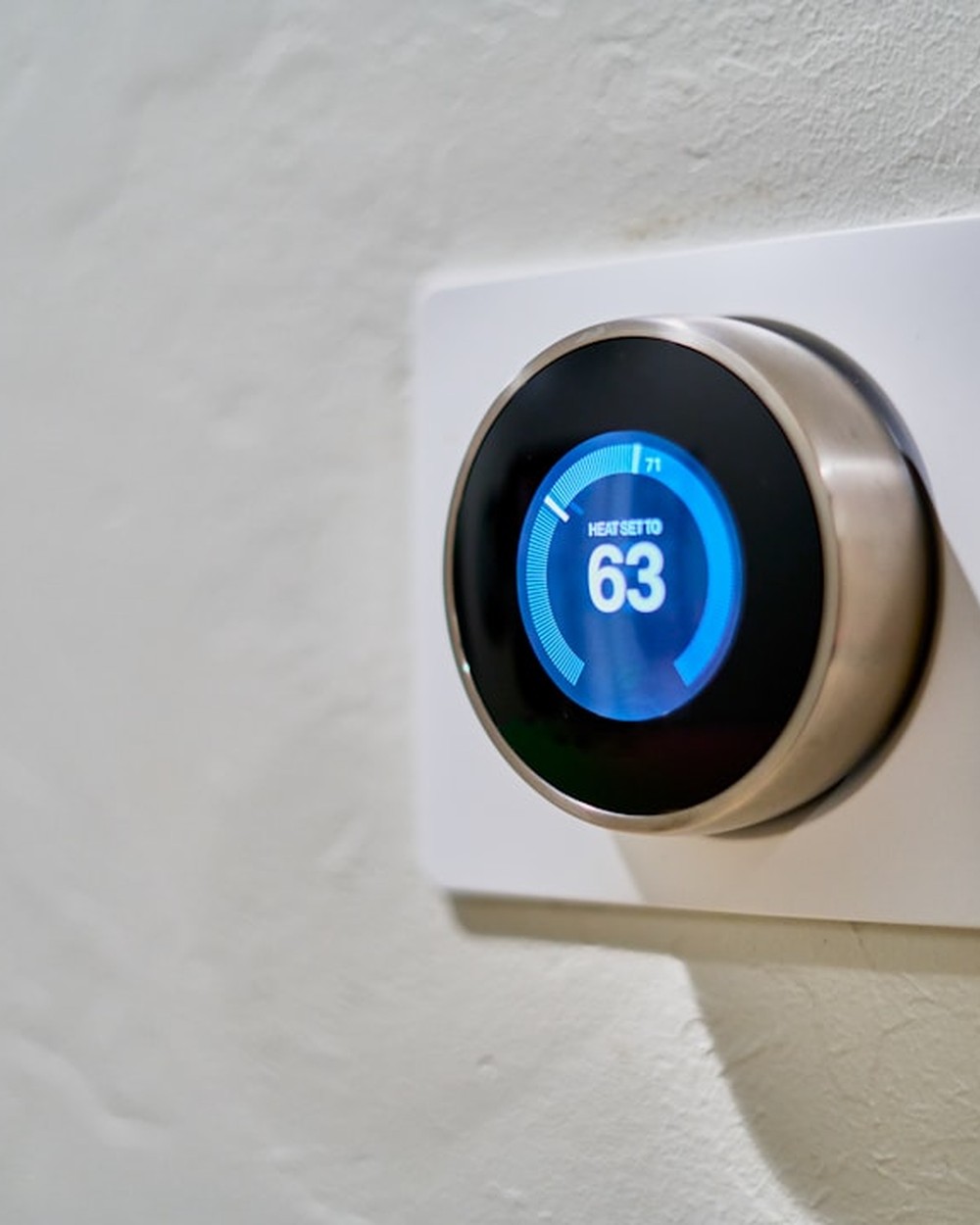
Home efficiency has become genuinely valuable again now that rates are climbing. Three of the highest-return moves for a Texas residential home:
- Use a thermostat setback. The U.S. Department of Energy estimates you can save as much as 10% a year on heating and cooling by turning the thermostat back 7 to 10 degrees Fahrenheit for 8 hours a day from its normal setting (U.S. Department of Energy).
- Weatherize the envelope. The Texas Department of Housing and Community Affairs reports that weatherization measures reduce average annual energy costs by up to $413 per home (TDHCA Weatherization Assistance Program).
- Swap any remaining incandescent bulbs for LEDs. LED lighting products produce light up to 90% more efficiently than incandescent bulbs, which release about 90% of their energy as heat (ENERGY STAR). In a Texas summer, that wasted heat is something your air conditioner then has to remove.
None of these are glamorous on their own, but together they compound with the Lock and Layer moves. For a deeper walkthrough see our guide on how to save money on your Texas electricity bill.
Log: Watch Your Usage Like an Owner
The last L is the one Texas homeowners skip. Log your monthly usage. Your Smart Meter Texas data, your Chariot online account, and even a simple spreadsheet will show you a spike two months before it wrecks a bill. If your average kilowatt-hour usage jumps 15% one month with no lifestyle change, something is off, usually the HVAC system or a failed weather seal, and it is worth an hour to diagnose.
Should You Lock In a Fixed Rate Before Summer 2026?
For most Texas residential customers, yes. Locking a fixed rate before June is the fastest, most reversible move you can make against 2026 price pressure. The downside of locking a competitive fixed rate is limited because rates are trending up rather than down, and the volatility risk of variable plans is at its highest in exactly the months when your home uses the most power.
If you are on a variable, indexed, or expiring fixed plan today, this is the month to run a plan comparison and switch. If your current plan expires in late summer, the standard advice is to shop 30 to 45 days out, but in 2026 shopping now and moving early is often the better call.
Run the numbers today. Compare Chariot plans against your current rate, or talk to our team if you want a hand reading your bill.
Why Chariot Energy Is Built for This Moment
Chariot Energy was designed for exactly the market Texas is entering: rising underlying demand, more volatility, and residential customers who want a predictable rate backed by real solar generation. As a subsidiary of 174 Power Global within the Hanwha Group, Chariot does not just buy solar credits on the open market. Our standard residential plans are 100% solar-matched, backed in part by utility-scale solar farms Hanwha developed in Texas, including the 180-megawatt Oberon Solar Farm in Ector County. Our fixed rates are built to hold through summer peaks, and for homeowners with panels, our solar buyback plans add credit for the energy your system exports.
If you are a Texas residential customer watching your bill climb, the fastest step is to compare a Chariot fixed-rate or solar plan against what you are paying today. In most cases, five minutes of shopping is the difference between absorbing the 2026 rate curve and locking it out of your household budget. Explore Chariot residential plans or talk to our team.
Frequently Asked Questions
Are electricity bills going up because of AI?
Yes, in large part. AI training and inference workloads sit behind the majority of new large load requests on the ERCOT grid, where data center load in the 2030 forecast jumped from 29,614 megawatts to 77,965 megawatts in a single year of ERCOT collection (ERCOT, April 2025), and the same force drove an estimated 63% of the capacity price increase on the PJM grid (Monitoring Analytics via IEEFA, 2025). AI does not directly raise your residential rate line item, but the generation, transmission, and reliability spending needed to serve AI loads does show up in wholesale prices and delivery charges over time.
Is the data center problem only in Texas?
No. It is a national grid story. PJM Interconnection, which serves more than 67 million people across 13 states and Washington, D.C., saw its capacity costs jump from about $2.2 billion to about $14.7 billion in the 2025 to 2026 auction (Utility Dive, 2024), and IEEFA estimated that added roughly $16 to $18 a month to average residential bills in parts of Ohio and western Maryland (IEEFA, 2025). Texas and ERCOT are on the same trajectory, which is why acting early matters here.
How is Chariot’s electricity 100% solar if I do not have panels?
Chariot matches your usage to power generated by utility-scale solar farms, including projects its parent company, 174 Power Global (part of the Hanwha Group), developed in Texas, such as the 180-megawatt Oberon Solar Farm near Odessa. You still receive normal, reliable grid electricity. Chariot backs it with solar generation through long-term agreements, so no rooftop system is required.
When will Texas electricity prices peak?
Analyst forecasts vary, but most point to the late 2020s. The Texas Energy Poverty Research Institute projects Texas rates rising another 29% through 2030, leaving the average household paying about $580 more per year than in 2025 (TEPRI, reported September 2025). Prices will not move in a straight line, and weather-driven spikes will still be sharpest during summer peak months.
Does Senate Bill 6 lower my residential electricity bill directly?
No, not directly. SB 6, effective September 1, 2025, reallocates a larger share of interconnection and reliability costs onto large loads such as data centers. It slows the rate at which those costs flow into residential bills, but it does not roll back the rate you pay today.
Is a fixed-rate electricity plan really lower risk in Texas?
For most residential customers, yes. Variable and indexed plans expose you to wholesale price volatility. During Winter Storm Uri, the PUCT ordered ERCOT wholesale prices to $9,000 per megawatt-hour, close to 300 times the typical pre-storm price (ERCOT HB 4492 Securitization). A competitive fixed rate trades a little upside in a mild year for a lot of downside protection in a bad one.
Can I switch electricity providers if I am mid-contract?
Yes. Most Texas residential electricity contracts include an early termination fee, and the amount is disclosed on your Electricity Facts Label. Under Public Utility Commission of Texas rules, you can switch without paying that fee during the final 14 days of your contract term, and switching does not interrupt your service (Public Utility Commission of Texas, Your Rights as a Customer). If your rate is significantly above the current market, the switch can be worth the fee even mid-term.
How do I know if my current rate is competitive?
Compare your effective rate (bill amount divided by kilowatt-hours used) against the 16.44 cents per kilowatt-hour Texas residential average as of May 2026 (EIA) and, more importantly, against a fresh Chariot quote for the same usage profile. If you are more than 1 to 2 cents above a competitive fixed rate at your usage level, it is worth running the comparison.
Bottom Line
Rising bills are not a mystery. Data centers and AI are pulling harder on ERCOT and PJM than on any other US power markets, new infrastructure is expensive, and Winter Storm Uri costs are still being unwound. PJM already shows what that looks like on a household bill. Texas still has room to get ahead of it. You cannot slow the demand curve, but you can control what you pay by locking a fixed rate, choosing power backed by Hanwha’s Texas solar farms, tightening efficiency, and watching your usage every month. That is the 4L Playbook, and it works. Compare Chariot plans now or talk to our team to get started.
Plan details, rates, and fees are subject to change. Rate comparisons in this article are as of May 2026 and reflect residential Texas market averages. An Electricity Facts Label (EFL) is available for every plan at chariotenergy.com/home-electricity-plans. Terms and conditions apply. Subject to credit approval.